Living with Dementia and Sight Loss
Living with Dementia and Sight Loss: 10 Practical Tips for Support, Safety and Confidence
Living with dementia can be challenging — and when sight loss is also part of the picture, everyday life can feel even more confusing and stressful for the person affected, as well as for family members and carers.
At Galloways, we support people with sight loss across Lancashire and South Cumbria, and we know how important it is to understand the combined impact of memory changes and reduced vision. The good news is that with the right support, small changes can make a big difference.
Here are our top 10 practical tips to help.
1. Get the right diagnosis for both conditions
Dementia and sight loss are both common, but they can be underdiagnosed — especially when they occur together.
It’s important to:
-
arrange regular eye tests, even if communication is difficult
-
make sure there is a thorough dementia assessment
-
speak up if something doesn’t feel right — delays or misdiagnosis can lead to unnecessary frustration and inappropriate care
Sometimes, improving vision (even slightly) can make day-to-day life feel much more manageable.
2. Understand Charles Bonnet Syndrome (CBS)
People with significant sight loss may experience visual hallucinations — a condition known as Charles Bonnet Syndrome (CBS).
These hallucinations can be vivid (for example, patterns, animals, or people), and they can be frightening if someone doesn’t understand what’s happening.
With dementia, CBS can sometimes be mistaken for worsening confusion or distress, so it’s helpful to know the signs.
Key advice:
-
CBS hallucinations are often visual only
-
they can be detailed and realistic
-
reassurance matters — many people worry they’re “going mad”, when they’re not
If this is happening, it’s worth speaking to a health professional and getting the right support.
3. Adapt the environment for both dementia and sight loss
A supportive environment can reduce falls, anxiety and disorientation.
Simple changes include:
-
improving lighting (especially in hallways and bathrooms)
-
using contrasting colours (for example, a dark toilet seat on a white toilet)
-
reducing visual clutter (too much can be overwhelming)
-
adding tactile and audio cues, such as talking clocks or textured markers like bump ons.
4. Communicate clearly and calmly
When sight is unreliable, people rely more on voice, tone and touch.
Try to:
-
speak slowly and clearly
-
say the person’s name before speaking
-
gently touch their arm or hand (if they’re comfortable with that)
-
explain what you’re doing as you do it (“I’m just putting the cup on the table in front of you”)
Narrating what’s happening can reduce confusion and help someone feel safer.
5. Build consistent routines
Familiar routines reduce anxiety and help people feel more confident.
This is especially important when someone can’t rely on vision to orient themselves.
Keeping things predictable — meal times, activities, and daily structure — can make life calmer for everyone.
6. Use assistive technology (keep it simple)
The right tools can support independence and reduce reliance on others.
Helpful options include:
-
audiobooks or talking newspapers
-
voice assistants such as Alexa or Siri
The key is to choose simple, reliable devices, and introduce them gradually with repetition.
7. Support independence safely
Independence matters — but so does safety.
You can support both by:
-
removing trip hazards and trailing cables
-
using handrails and clear walkways
-
adding tactile markers to appliances (e.g., raised dots on cooker controls like bump ons)
-
labelling cupboards using large print and/or braille where helpful
Small adaptations can reduce falls risk and increase confidence at home.
8. Support emotional wellbeing
Dementia and sight loss together can increase the risk of:
-
loneliness
-
fear and frustration
-
low mood or depression
Make space for emotions and offer reassurance. Meaningful social connection is just as important as practical support.
Where possible, involve the person in decisions — even small choices help maintain dignity and confidence.
9. Help carers feel informed and supported
Caring for someone with both sight loss and dementia can be exhausting, and many carers don’t realise how complex this combination can be.
Training and support can help carers understand:
-
how sight loss affects communication and confidence
-
how to respond to Charles Bonnet Syndrome
-
strategies for safe independence and reduced distress
At Galloways, we can support people with sight loss and share practical strategies to make everyday life easier.
10. Connect with specialist services
You don’t have to manage this alone. Support is available through:
-
dementia specialists
-
social workers and occupational therapists
-
local charities and community services
Galloways can also help with practical support and advice for living well with sight loss.
New dementia support services in Lancashire and South Cumbria
With increasing numbers of people being diagnosed with dementia, the NHS in Lancashire and South Cumbria has committed to a new five-year dementia strategy to improve the lives of people affected.
A new post-diagnostic support service has been commissioned by the ICB and will be delivered by Alzheimer’s Society and Age UK Lancashire. This includes:
-
Cognitive Stimulation Therapy sessions
-
Dementia Hubs (Preston, West Lancashire, Chorley, Morecambe)
People can access post-diagnostic support through a health or social care professional, or self-refer using the contact details below:
East Lancashire
📞 01282 447757
✉️ eastlancashire@alzheimers.org.uk
Blackpool and North Lancashire
📞 01253 696854
✉️ northlancashire@alzheimers.org.uk
Central and West Lancashire
📞 01772 788700
✉️ centrallancashire@alzheimers.org.uk
South Cumbria
📞 01253 696854
✉️ northlancashire@alzheimers.org.uk
You can read more here:
https://www.lancashireandsouthcumbria.icb.nhs.uk/news-and-media/latest-news/new-services-introduced-improve-lives-those-dementia
What does the research say about vision loss and dementia?
Alzheimer’s Research UK highlights that more than 1 in 10 people over the age of 50 have uncorrected visual impairment — meaning a sight problem that hasn’t been corrected through glasses, contact lenses, or treatment.
Recent research suggests some types of visual impairment (including cataracts and diabetic retinopathy) may be linked to a higher likelihood of developing dementia, while other eye conditions (such as glaucoma and age-related macular degeneration) do not appear to show the same link.
Research is ongoing, but one clear message is this: looking after your eye health matters.
If you’ve been prescribed glasses or contact lenses, it’s important to use them as advised.
Read more here:
https://www.alzheimersresearchuk.org/news/vision-loss-dementia-and-what-it-could-mean-for-you/
How Galloways can help
If you or someone you care for is living with sight loss alongside dementia, you’re not alone.
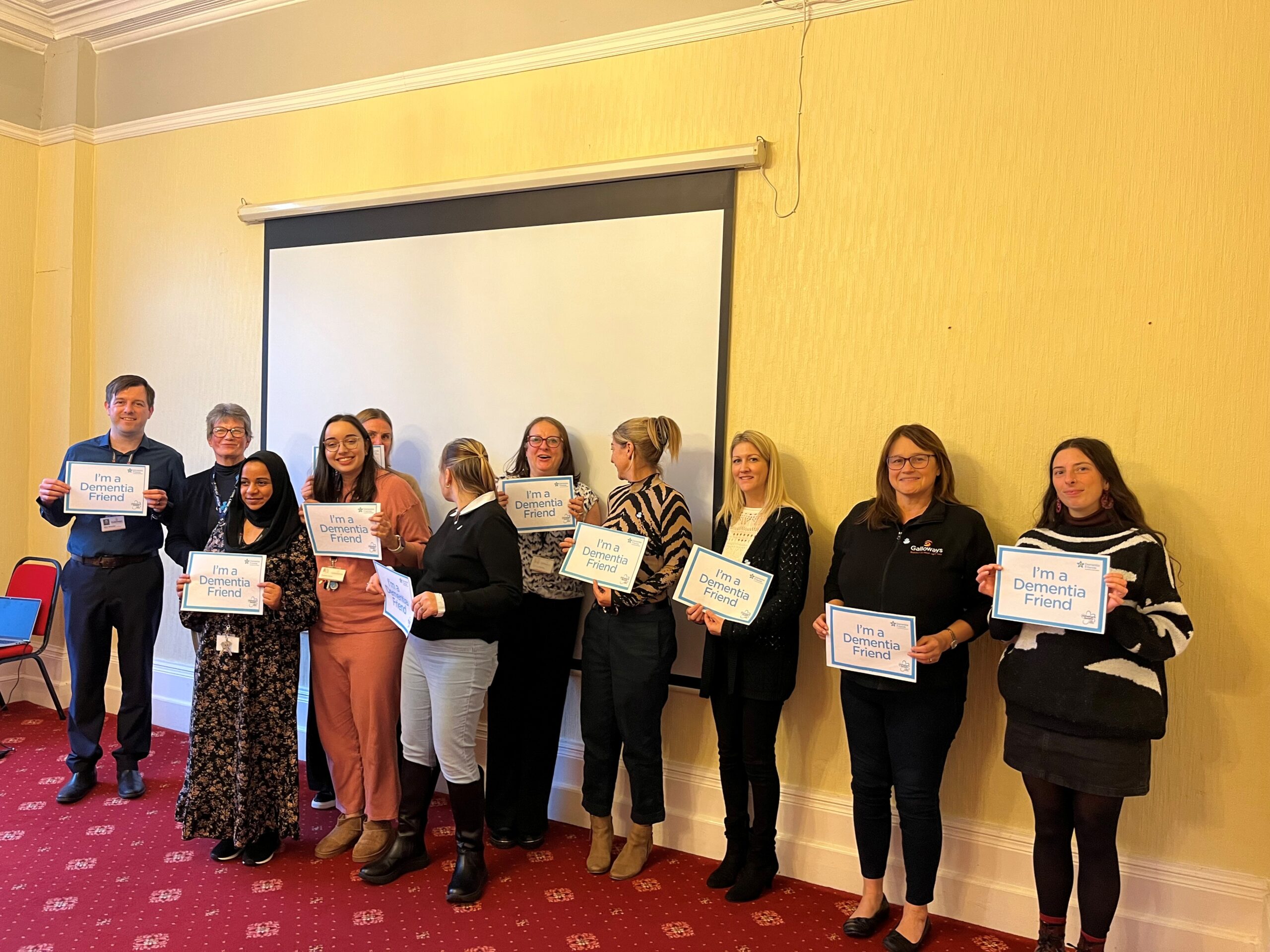
Galloways can offer practical support, advice and guidance to help people stay safe, independent and connected. Our team have recently completed their Dementia Friends training so have a greater knowledge and understanding of living with dementia.
To find out more or to access support, please contact us.