
Emotional Impact of Sight Loss | Mental Health Awareness Week
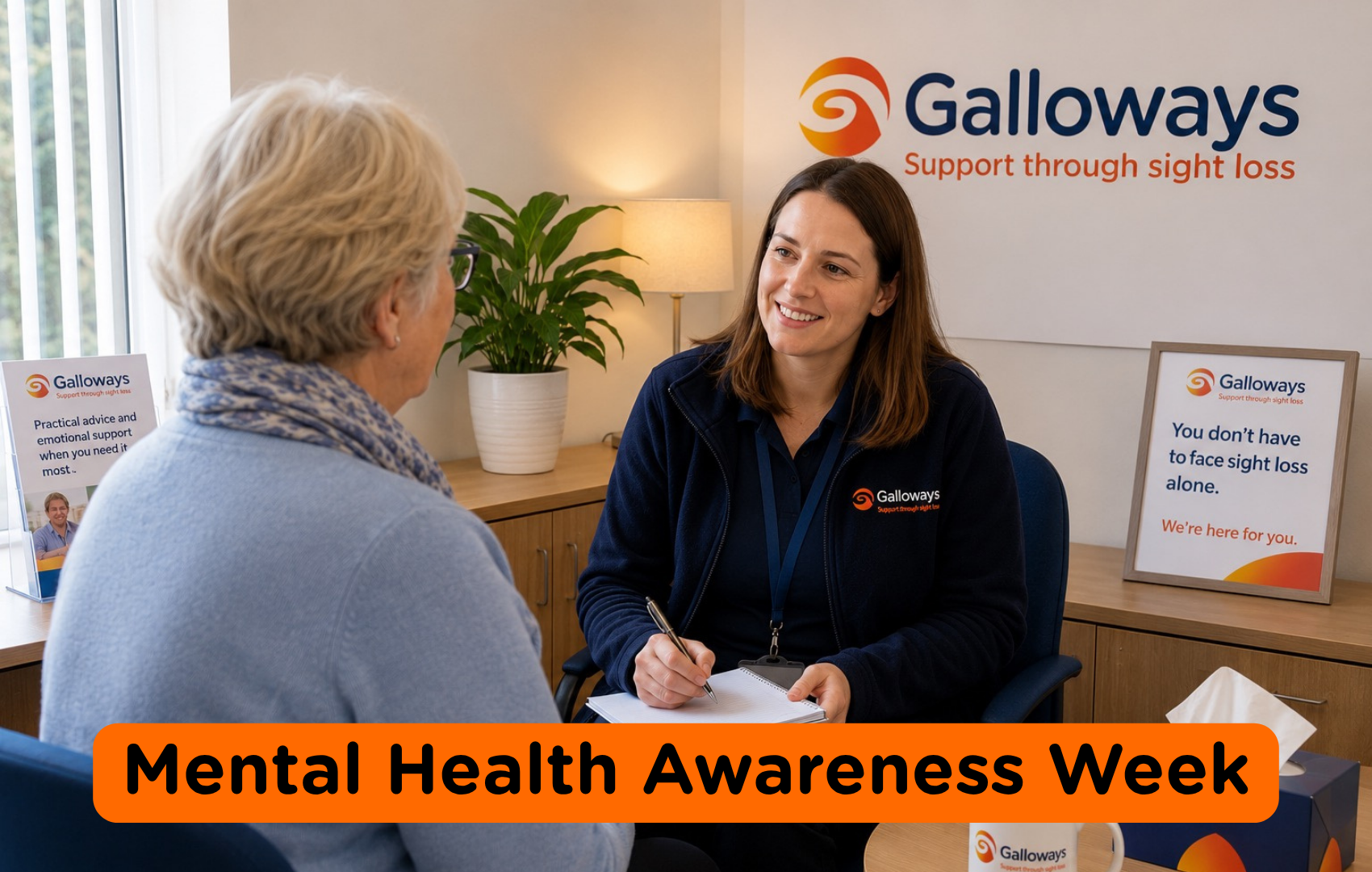
Mental Health Awareness Week: The Emotional Impact of Sight Loss
Losing your sight can change the way you experience the world — but it can also affect how you feel about yourself, your confidence, and your future.
During Mental Health Awareness Week, we want to highlight the emotional impact of sight loss and remind anyone struggling that they are not alone.
In the UK, more than 2 million people are living with sight loss, including many with irreversible conditions such as macular degeneration, glaucoma, and diabetic eye disease. Alongside the practical changes, many people experience feelings of anxiety, loneliness, frustration, or depression.
Understanding the Emotional Impact
Everyone responds differently to sight loss. For some, emotions appear immediately after diagnosis, while for others the emotional impact develops gradually over time.
Adjusting to sight loss is often compared to the stages of grief. These feelings are natural and may come and go over time.
Denial
Struggling to accept changes in vision or the impact of a diagnosis.
Anger
Feeling frustrated about losing independence or changes to daily routines.
Bargaining
Searching for treatments or hoping to regain control of the situation.
Depression
Experiencing sadness, anxiety, loneliness, or withdrawing from others.
Acceptance
Beginning to adapt, rebuild confidence, and find new ways forward.
There is no set timeline for adjustment, and no “right” way to feel. What matters is recognising when support may help.
You Are Not Alone
Many people living with sight loss describe feeling isolated, overwhelmed, or uncertain about the future — especially in the early stages following diagnosis.
These feelings are valid, and it’s important to remember that asking for support is not a sign of weakness. Talking openly about mental health can be an important step towards coping and adjusting.
With the right support, many people find new ways to stay connected, independent, and confident.
When Sight Loss Affects Identity
Sight loss can also affect a person’s sense of identity. Activities, hobbies, careers, and routines that once brought confidence and purpose may suddenly become more difficult.
This can lead to feelings of grief, isolation, or uncertainty about the future. It may also affect social confidence and emotional wellbeing.
Acknowledging these feelings is an important step towards adapting and rebuilding confidence.
Looking After Your Mental Wellbeing
There are small steps that can help support emotional wellbeing while adjusting to sight loss:
- Stay connected with friends, family, or support groups
- Talk openly about how you are feeling
- Maintain routines where possible
- Ask for help when you need it
- Focus on what you can still do, rather than what has changed
- Access specialist support and advice early
Everyone’s journey is different, and support needs can change over time.
How Galloways Can Help
At Galloways, we know that adjusting to sight loss can feel overwhelming at times. Our team is here to listen, provide reassurance, and help people find practical ways to adapt and regain confidence.
From emotional support to practical advice and independent living guidance, we work alongside people every step of the way.
Whether someone has recently been diagnosed or has been living with sight loss for many years, support is available.
You do not have to face sight loss alone. Contact Galloways to find out more about the support we offer or to arrange an assessment.
- Call: 01772 744148
- Email: enquiries@galloways.org.uk
- Visit: www.galloways.org.uk
Where to Get Mental Health and Emotional Support
If you or someone you know is struggling emotionally, support is available.
NHS Mental Health Support
- Call 111 and select the mental health option
- Contact your GP for advice and support
- Visit NHS Every Mind Matters:
https://www.nhs.uk/every-mind-matters/
Samaritans
Available 24 hours a day for anyone who needs someone to talk to.
- Call 116 123
- Email jo@samaritans.org
- Visit: https://www.samaritans.org
Shout Crisis Text Line
Free confidential text support 24/7.
- Text SHOUT to 85258
- Under 19s can text YM instead
Mind
Mental health information and support.
- Call 0300 123 3393
- Text 86463
- Visit: https://www.mind.org.uk
Silver Line
A free confidential helpline for older people experiencing loneliness.
- Call 0800 4 70 80 90
- Visit: https://www.thesilverline.org.uk
Childline
Support for children and young people under 19.
- Call 0800 1111
- Visit: https://www.childline.org.uk
Carers UK
Support for unpaid carers who may also be struggling emotionally.
- Call 0808 808 7777
- Visit: https://www.carersuk.org


