
How blind baseball is shaping lives
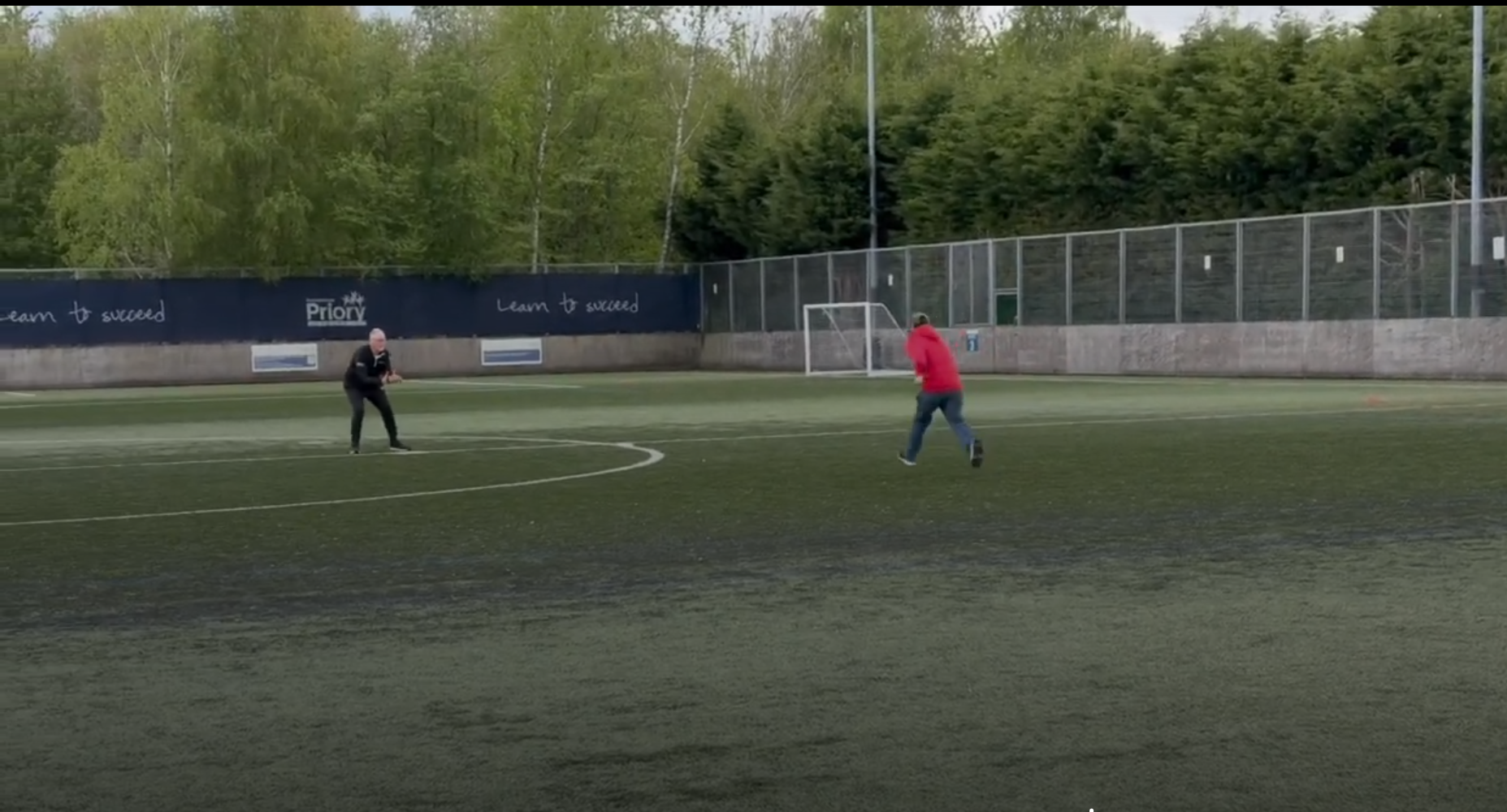
The Lancashire charity using blind baseball to help shape visually impaired lives
Written by Harvey Hodgson, student of journalism at UCLan.
The room is bursting with sound that is immediately noticeable before a door is opened. Bells, claps and shouts echo through the walls. That’s because, in this Penwortham sports hall, sight loss charity Galloways is running a blind baseball session.
“We are trying to achieve more participation of blind and partially sighted people in sport,” explains their Learning Skills and Lifestyle Manager Andrew Coleman.
“We want to build that confidence so that people feel more confident being involved in sport.”
Coleman himself is partially sighted, and that’s why he’s so passionate about helping others in his situation. Galloways have run sessions around tennis, cricket, popular Paralympic sport goalball, and now baseball.
But why baseball? As of 2020, only 22,500 people in the UK were active players. But, as Coleman explains, there are all kinds of benefits.
“It’s great for orientation; people are running unaided so, for a lot of blind and partially sighted people, to run unaided and to learn the orientation is really important,” he says.
Like many sports for the partially sighted, blind baseball depends heavily on sound. The ball contains a bell and is hit by the batter towards the fielders. Unlike in sighted baseball, the batters hold the ball themselves before hitting it. There are also sighted players, who use audible cues to alert the fielders to their position. The partially sighted fielders then throw them the ball.
While the players here are new to the game, some have the potential to go to the top according to coach John Eaton.
“There is potential for some of these players to actually be in the GB squad in the future without any real, massive push to get to that level,” he says.
That’s not an unfounded opinion. He and Nathan Potts coached Great Britain at the International Cup held in 2024, where they finished fourth. But for them, the sporting achievements come second to the personal triumphs.
With the occasional wobble to his voice, Potts says: “I sometimes sit back and watch the games being played and I get emotional about it sometimes. It makes me appreciate what I have as well. It is very, very inspiring for me.”
As for the participants, the opportunity to come and play sport has benefits many sighted people might never have considered.
“I probably enjoy the running the most,” says Rebecca Thornber, who is a regular.
“When I run on Parkruns, I’ve got a guide dog with me whereas, with this, you’re just running on your own and it’s quite liberating really in a lot of ways.”
Thornber has oculocutaneous albinism, a form of albinism that affects eyesight as well as the condition’s typical symptoms. For her, another issue with her impairment is travel, but Galloways provides a solution in the form of a free minibus.
“Having the meet up at Preston Bus Station is fantastic, because you’re getting on the bus with other people that I’m getting to know more and more on a regular basis and it’s nice. It’s really helpful. I wouldn’t have a clue otherwise.”
Fellow participant Bilal Akhtar agrees. He has retinitis pigmentosa, which has slowly decreased his levels of sight, but he has managed to overcome his impairment and find a new lease on life.
“The best thing that I’ve found about joining these sports clubs or playing sports is meeting new people who have inspired me with what they’ve done in life, especially when they have a lot less vision than myself, to build confidence in myself to do things I thought I might not be able to achieve once my vision went bad.”
Galloways recently received a grant from Sport England to allow them to keep offering their sessions to visually impaired people, and baseball remains very popular. As Thornber puts it, it’s an opportunity that shouldn’t be passed up.
“I think life’s too short not to try new things, isn’t it? I mean, the option is: sit at home and not try anything and do the same thing you do every night. Or, go out and try something new and meet new people and have a laugh,” she says.
“It’s a no brainer, isn’t it? Find a way. It’s worth a try.”


